Elgin · Bastrop County
Underground Downspout Drains in Elgin, TX
Roof water is a lot of water. Rain on a 2,000 square foot roof can send over 1,000 gallons off the roof from a single inch of rain. In Elgin that water lands next to a clay foundation that swells when wet. Buried downspout lines carry it 10 feet or more away to a pop-up emitter, a ditch or the street, where the city allows it.
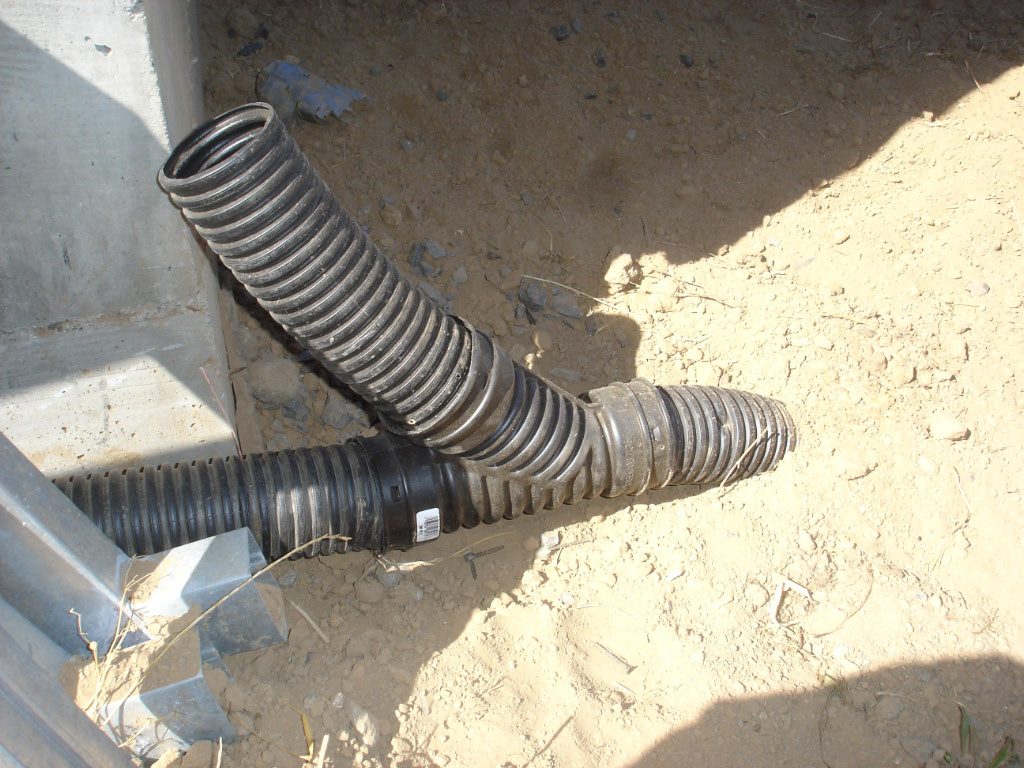
Underground Downspout Drains for Elgin homes
A single Elgin roof can shed a surprising amount of water. A 2,000 square foot roof sends roughly 1,200 gallons off its edges during a one-inch rain. Many rural and edge-of-town homes here also have metal roofing, which sheds water fast and in a concentrated stream. When that stream lands in a six-inch circle beside the slab, the clay under it turns to soup, swells, and then shrinks again in the next dry spell. Count your downspouts and note where each lands. Elgin houses with long rooflines often have four to eight, and each one is a small stream of its own. Sometimes two corners can share a single buried line, which cuts trenching, but a pipe carrying too many downspouts can back up in a hard downpour, so capacity is checked first.
Underground downspout drains solve this by catching the water at the gutter and piping it away through solid pipe. In Elgin the usual goal is to carry it 15 to 25 feet or more from the house to a daylight outlet on a lower part of the lot, rather than burying it in clay that will not take it. Solid four-inch pipe, glued joints at the connections and a steady slope are the basics. Corrugated pipe tends to sag and trap debris, so it is a poor choice for long runs. Pipe fittings matter more than people expect. Elbows should be gentle sweeps instead of tight turns, and every joint needs a snug glued or gasketed fit. A cleanout near the first bend gives you an access point to clear a clog. Without one, the only way to find a blockage later is to dig the line back up.
Older homes near downtown Elgin sometimes have no gutters at all, or have gutters that dump straight at the foundation corner. Adding gutters and a buried drain is one of the simplest upgrades for those houses. Check your HOA or city rules for where a pipe may exit, and keep the outlet off the neighbor's side of the fence. Texas Water Code section 11.086 applies to concentrated discharge, and calling 811 before you dig is required in Texas. Where the pipe finishes depends on the lot. A pop-up emitter works on a lawn slope, a gravel splash zone suits a back corner, and a tie into a French drain works if both are already planned. Whichever you pick, walk the finish with the crew on a day it rains lightly, so the water path is visible before the trench closes.
What to know in Elgin
Metal roofs move water fast
Standing seam and panel roofs shed rain quickly, and wide gutters with larger downspouts handle the surge better. If your Elgin home has a metal roof, ask about 3-by-4 inch downspouts and pipe sized to match. Undersized systems overflow at the first thunderstorm. Metal roofs shed rain in sudden sheets, so ask about leaf-and-debris screens at the gutter.
Choose the outlet before the trench
On a flat lot, the exit point sets everything. A pop-up emitter, a splash pad at a low corner or a tie-in to a French drain are common choices. Pick the outlet first, measure the fall, then decide whether the run is practical or needs a different design. A temporary hose test at the outlet shows whether the pipe has real fall before the trench is backfilled.
Gutters first, drains second
A buried pipe cannot help if the gutters are clogged or pulled away from the fascia. Pecan and oak leaves fill gutters quickly around Elgin. Cleaning gutters twice a year and adding leaf guards where it fits protects the underground system from silt. Roof area, not house width, sets the size: two-story sections feeding one downspout need the larger pipe.
Signs you may need underground downspout drains
- Soggy lawn directly below a roof valley or downspout
- Downspouts that end right next to the foundation
- A trench of eroded soil or exposed gravel under a downspout
- Water streaming along the foundation wall during rain
How underground downspout drains works
A roof collects far more water than most people picture. As a rough rule, one inch of rain falling on 1,000 square feet of roof produces about 600 gallons of water. A typical single-story home in the Pflugerville area may have well over 2,000 square feet of roof, so a one-inch storm sends more than a thousand gallons down the gutters in a short time. All of it exits through a few downspouts. If those downspouts simply spill onto the ground beside the slab, that water soaks the soil right where the foundation needs steady, even moisture, and it often runs along the wall or across the lawn toward your neighbor. Multiply that by every storm in a wet spring and the soil beside the slab rarely gets a chance to dry out.
An underground downspout drain fixes that by catching the water at the bottom of each downspout and sending it through buried pipe. The setup usually starts with a downspout adapter that connects to solid, non-perforated pipe, often four-inch PVC or corrugated pipe with a smooth interior. The pipe is buried in a shallow trench with a steady downhill slope. It runs ten to thirty feet or more from the house, and then it ends at a pop-up emitter, a daylight outlet at a lower part of the lot, a catch basin, a dry well, or a connection to a storm system where the city allows it. Cleanouts at the base of each downspout let you flush leaves out later, and a grate or screen keeps debris from entering the line in the first place.
What to expect on a Elgin visit
- 01
Map the gutters and downspouts
We note every downspout, what roof area it serves, and where it lands now. Larger roof sections and valleys concentrate more water, so they get priority. We also check that gutters are clear and well pitched, because clogged gutters spill over the edge and send water to the foundation anyway, even when downspouts are piped away.
- 02
Pick the outlet first
The discharge point drives the whole design, so we choose it before laying out the pipe. We look for a lower part of your lot, an approved connection, a catch basin, or soil that can support a dry well. Rules vary by city and HOA, so any shared lot line, easement, or street connection is checked first.
- 03
Call 811 and lay out the route
Texas law requires a call to 811 at least two business days before digging, excluding weekends and holidays. Public utilities mark their lines at no charge. We paint the pipe route, steer around known irrigation lines and tree roots, and keep the path as straight as possible with gentle bends instead of tight corners.
- 04
Trench and set the pipe on a steady slope
Trenches are usually shallow, deep enough to protect the pipe from mowers, edging tools, and foot traffic. The bottom is graded so the pipe falls at least one-eighth inch per foot, often a quarter inch, so water and debris keep moving. Solid pipe is joined with proper fittings and connected to each downspout.
- 05
Add cleanouts and the outlet fitting
A small cleanout at the base of the downspout and at major turns lets leaves or roof grit be flushed out later. The pipe ends in the chosen outlet, such as a pop-up emitter that opens under flow and closes when dry, or a daylight spout with a rock apron to slow the water and prevent erosion.
- 06
Test with water and restore the lawn
Before we backfill, we run a hose into each downspout connection and watch the outlet and the joints. Any leak is fixed first. Then the trench is filled and compacted in layers, sod is replaced or reseeded, and the area is graded so no new low spot forms above the pipe. We also show you where each cleanout sits.
Our approach in Elgin
- We walk the property in Elgin and trace where water comes from, where it collects and where it can legally go
- We explain what we find in plain language, with photos where they help
- Repairs and installs are planned around Bastrop County permitting requirements
- You get written options before any repair work begins
- We call 811 to mark buried utilities before any digging
Soil and drainage conditions around Elgin
Expect three problems again and again in Elgin. First, soggy yards where the clay refuses to absorb water, which is where French drains, surface swales and dry wells do the most good. Second, downspouts that dump right at the foundation, which feed the same clay that swells and shrinks under the slab. Third, concrete that sinks or heaves, because clay moves with moisture and fill under new slabs compacts unevenly. Foam leveling lifts patios, walks and driveways without tearing them out, and crack and joint sealing keeps surface water from washing under the edges. We do not repair structural foundations. If doors stick, bricks crack or you see stair-step cracks in the walls, have a structural engineer or foundation repair company evaluate the house. Fixing the drainage around it is often part of keeping the repair stable. Dry summers make it worse, because shrunken clay opens cracks that gulp the first rain, then swells shut and sends the rest across the surface. Annual rainfall is roughly in the mid-30 inches.
Underground Downspout Drains questions from Elgin homeowners
How far from the house should a downspout drain discharge?
Aim for at least 10 feet, and 15 to 25 feet when your lot allows it. The farther the better in expansive clay, because water near the slab changes soil moisture around the foundation. The outlet should land on your property and drain away without crossing onto a neighbor's lot. Glued or gasketed joints keep tree roots and silt out, which is the usual reason buried lines clog.
Can I use corrugated flexible pipe myself?
You can, but it tends to sag, collect silt and crush under mowers. Smooth-wall solid PVC or SDR-35 pipe holds its slope better and clears more easily. If you dig yourself, call 811 at least two business days ahead so buried lines get marked first. Keep a sketch of the pipe route, because fence posts, sprinkler lines and shop expansions happen later.
Will a downspout drain stop foundation cracks?
It reduces one cause, which is concentrated water at the slab edge. It cannot reverse movement that has already happened. If you see wide or growing cracks, have a structural engineer or foundation repair company inspect the house, and keep the downspouts managed to protect their repairs. Upsizing to 3-by-4 inch downspouts costs little and cuts the chance of gutters overflowing in a cloudburst.
Is it okay to send downspout water to the street?
Some cities allow it through a curb outlet or a connection to a storm inlet, and others restrict or prohibit it. The rules and any permit requirements vary, so check with your city before building a route to the street. Never send the water across a sidewalk in a way that creates an icy or slippery hazard for people walking by.
How long do underground downspout drains last?
Solid PVC pipe can last for decades when it is installed on a steady slope with sealed joints and kept clear. Weak points are usually the fittings, the emitter, and roots. A quick check each spring and fall to run a hose through the line and watch the outlet will catch most problems before they cause damage. Leaf season matters most.
How far from the house should downspout water be sent?
A common recommendation is at least four to six feet, and ten feet or more is better on clay soils that stay wet for a long time. Buried pipe makes longer distances practical. The right distance also depends on your lot size and slope, since the water needs a legal, safe place to land and cannot simply be pushed onto a neighbor.
More about underground downspout drains → · All services in Elgin →
Need underground downspout drains in Elgin?
Call or send a request. We will look at where the water goes, check the grade and give you a written estimate.