Round Rock · Williamson County
Underground Downspout Drains in Round Rock, TX
Gutters on many Round Rock homes empty onto the ground beside the slab, which feeds swelling clay or washes out soil. Underground downspout drains carry that water to the street, a pop-up emitter or a dry well. Where limestone sits close to the surface, we plan the pipe route carefully to avoid costly rock cutting. Buried lines are flushed after installation to confirm water actually flows.
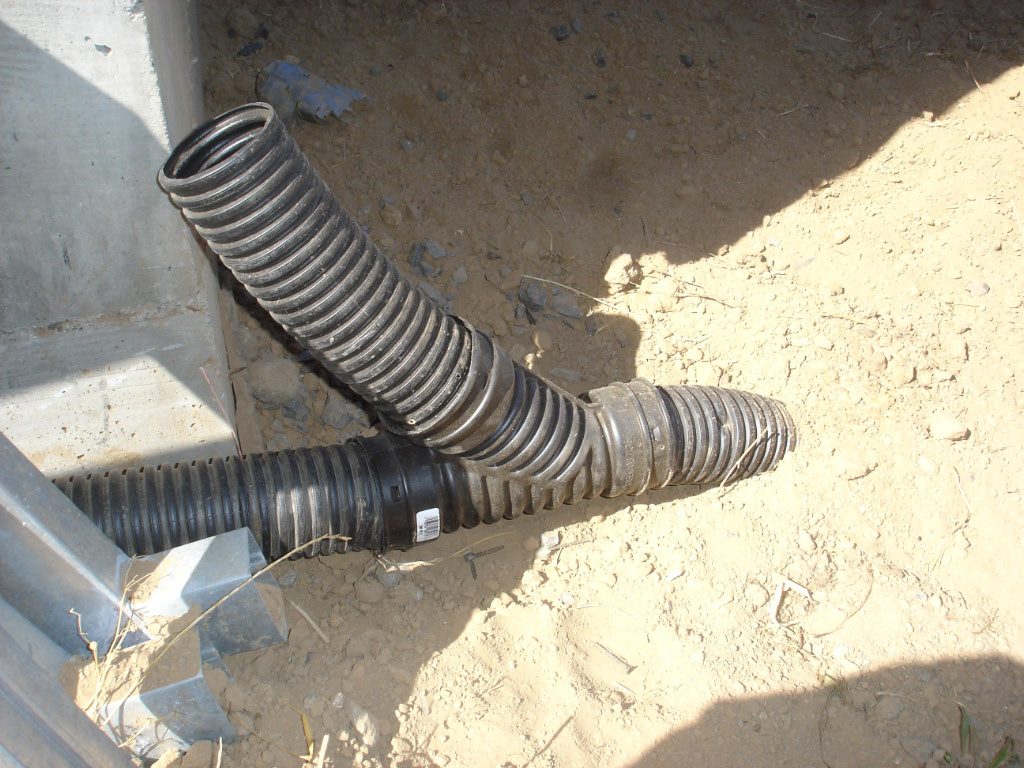
Underground Downspout Drains for Round Rock homes
A Round Rock roof sends a lot of water to just a few corners of the house. Homes with big back roof planes, covered patios and tall two-story walls can push hundreds of gallons from a single downspout during one thunderstorm. When that water lands beside the slab, it soaks the soil near the foundation and often runs back toward the wall. Underground downspout drains catch that flow in solid pipe and carry it to a safe exit. The yard looks cleaner, the splash that stains brick disappears, and the soil next to the foundation stays more consistent from season to season. Adding up each roof section's size shows which downspouts do the most work, and those are the ones to prioritize if the budget is limited.
The route depends on your lot. East-side lots are flat and clay-heavy, so the pipe needs a patient, steady slope and a discharge point such as a curb outlet, a pop-up emitter or a catch basin. West of I-35, hilly lots make drainage easier in one way, since gravity helps, but shallow limestone can limit how deep the trench goes. Pipe sometimes has to be laid shallow and covered with extra soil or routed around rock. Established neighborhoods often have older, smaller gutters and downspouts, and swapping to larger 3 by 4 inch spouts can help before you bury anything. On sloped lots, a pipe with too much fall can run fast and scour the exit, so a splash pad or rock apron at the end slows the discharge.
Do not connect roof water to the sanitary sewer cleanout. That can overload the sewer and cause backups, and many cities restrict it. Check with the City of Round Rock before connecting to any curb or storm inlet, and ask your HOA about visible emitters in the front yard. Install cleanouts at the upper end so leaves and shingle grit can be flushed, and add debris screens to the gutters. Call 811 at least two business days before digging. After the first heavy rain, walk the line and watch the exit to make sure it flows freely. Mark each run on a sketch with measurements from fixed points like the corner of the house, so later fence or pool work does not crush or cut the pipe.
What to know in Round Rock
Size the gutters and the pipe together
A large roof section on one downspout can overflow even a clean gutter. Adding a downspout, upsizing to larger spouts or splitting the flow between two pipes helps the underground line keep up. Burying a 4 inch pipe behind an undersized gutter only moves the bottleneck. Roof pitch matters too, since steep roofs shed water faster than low ones.
Plan around rock and roots
Shallow limestone on the west side may limit trench depth, and older neighborhoods have large tree roots. Routing the pipe around obstacles, or burying it shallower with proper cover, keeps it intact. A pipe laid over a root can sag, hold water and clog. Shallow burial under walks or driveways needs sleeves or thicker pipe.
Choose the outlet carefully
A pop-up emitter needs grass and room to spread flow. A curb outlet needs a clear path to the street. Tying into any public system needs the city's approval. Whichever you choose, the water should land on ground that slopes away from your home and your neighbor's. Keep outlets at least a few feet from property lines.
Signs you may need underground downspout drains
- A trench of eroded soil or exposed gravel under a downspout
- Water streaming along the foundation wall during rain
- Cracked or sunken splash blocks and walkways near the downspout
- Mud, mildew, or dampness along the base of exterior walls
How underground downspout drains works
An underground downspout drain fixes that by catching the water at the bottom of each downspout and sending it through buried pipe. The setup usually starts with a downspout adapter that connects to solid, non-perforated pipe, often four-inch PVC or corrugated pipe with a smooth interior. The pipe is buried in a shallow trench with a steady downhill slope. It runs ten to thirty feet or more from the house, and then it ends at a pop-up emitter, a daylight outlet at a lower part of the lot, a catch basin, a dry well, or a connection to a storm system where the city allows it. Cleanouts at the base of each downspout let you flush leaves out later, and a grate or screen keeps debris from entering the line in the first place.
The word solid matters. A French drain uses perforated pipe because it is meant to collect groundwater along its length. A downspout drain does the opposite. It is meant to move roof water from point A to point B without leaking any of it back into the soil near your house. If perforated pipe is used by mistake, or if joints are left unglued and loose, the water you tried to send away seeps out beside the slab. For that reason, downspout drains use solid pipe with sealed or tightly fitted joints, and they are tested with a hose before the trench is covered. Ask any installer to show you the pipe type and the test before the trench is closed; it takes only a few minutes.
What to expect on a Round Rock visit
- 01
Map the gutters and downspouts
We note every downspout, what roof area it serves, and where it lands now. Larger roof sections and valleys concentrate more water, so they get priority. We also check that gutters are clear and well pitched, because clogged gutters spill over the edge and send water to the foundation anyway, even when downspouts are piped away.
- 02
Pick the outlet first
The discharge point drives the whole design, so we choose it before laying out the pipe. We look for a lower part of your lot, an approved connection, a catch basin, or soil that can support a dry well. Rules vary by city and HOA, so any shared lot line, easement, or street connection is checked first.
- 03
Call 811 and lay out the route
Texas law requires a call to 811 at least two business days before digging, excluding weekends and holidays. Public utilities mark their lines at no charge. We paint the pipe route, steer around known irrigation lines and tree roots, and keep the path as straight as possible with gentle bends instead of tight corners.
- 04
Trench and set the pipe on a steady slope
Trenches are usually shallow, deep enough to protect the pipe from mowers, edging tools, and foot traffic. The bottom is graded so the pipe falls at least one-eighth inch per foot, often a quarter inch, so water and debris keep moving. Solid pipe is joined with proper fittings and connected to each downspout.
- 05
Add cleanouts and the outlet fitting
A small cleanout at the base of the downspout and at major turns lets leaves or roof grit be flushed out later. The pipe ends in the chosen outlet, such as a pop-up emitter that opens under flow and closes when dry, or a daylight spout with a rock apron to slow the water and prevent erosion.
- 06
Test with water and restore the lawn
Before we backfill, we run a hose into each downspout connection and watch the outlet and the joints. Any leak is fixed first. Then the trench is filled and compacted in layers, sod is replaced or reseeded, and the area is graded so no new low spot forms above the pipe. We also show you where each cleanout sits.
Our approach in Round Rock
- We walk the property in Round Rock and trace where water comes from, where it collects and where it can legally go
- We explain what we find in plain language, with photos where they help
- Repairs and installs are planned around Williamson County permitting requirements
- You get written options before any repair work begins
- We call 811 to mark buried utilities before any digging
Soil and drainage conditions around Round Rock
Round Rock grew up as a farm and cotton town. Blackland soils were well suited to cotton, and the railroad and later the interstate tied the town to Austin and Dallas. Modern Round Rock is a very different place, a large suburb with older neighborhoods near the historic downtown, 1980s and 1990s subdivisions, and newer communities toward the edges. Older homes often have original concrete patios and driveways that have lived through decades of wet and dry cycles, and some have gutters that dump right at the slab. Newer homes on smaller lots leave less room for water, and fences and landscaping can trap it. If you bought a home here, ask when it was built and whether the lot was regraded. That single fact tells us a lot about what to expect.
Underground Downspout Drains questions from Round Rock homeowners
Is it okay to bury downspout pipe in Round Rock rocky soil?
Usually yes, with adjustments. Where limestone sits near the surface, the pipe may be laid shallower and covered with fill, or routed around rock. Pipe needs a stable bed and enough cover to protect it from mowers and foot traffic. A contractor should check depth with a probe before committing to a route. Rock or roots may require a short detour.
Where should the downspout water end up?
At a safe, legal exit away from your foundation and your neighbor, such as a curb outlet, a pop-up emitter in the lawn or a catch basin. Avoid the sewer cleanout. The City of Round Rock and your HOA can tell you what is allowed. The exit should sit on ground that slopes away from the house. A cleanout at the top makes yearly flushing a five-minute job.
How do I keep underground downspout pipes from clogging?
Keep gutters clean, add screens, and put a cleanout or a catch point at the top of each run. Flush the pipe with a hose once a year. Shingle grit, leaves and silt are the usual culprits, and a sloped, smooth-wall pipe clears more easily than one that sags or has deep ribs. Never route it through the sewer line or onto a neighbor's lot.
Can I connect downspouts to a French drain?
In most cases, you should not. A French drain is built to collect groundwater through perforated pipe, and a sudden burst of roof water can overload it or push silt into the gravel. Downspouts should go on their own solid pipe to a separate outlet. Some designs do tie the two systems into one outlet downstream, but that needs careful planning. Ask for the design in writing.
What is a pop-up emitter, and does it work in clay?
A pop-up emitter is a capped fitting at the end of a buried pipe. Water pressure lifts the cap during rain and releases the water onto the lawn, and the cap drops closed afterward. It works well on a lot with enough slope and open space to spread the water. On flat clay, it needs room, since the water may pool nearby.
Do I need to call 811 before digging a downspout trench?
Yes. Texas law requires notice to Texas811 at least two business days before excavation, not counting weekends or holidays, and that applies to homeowners too. Public utilities will mark their lines for free. Private lines, like irrigation or landscape lighting, usually are not marked, so point out anything you know about to the crew. Call early so your start date is not pushed back.
More about underground downspout drains → · All services in Round Rock →
Need underground downspout drains in Round Rock?
Call or send a request. We will look at where the water goes, check the grade and give you a written estimate.