Round Rock · Williamson County
Driveway & Sidewalk Leveling in Round Rock, TX
Driveway panels that dropped or sidewalks with raised edges create trip hazards and send water toward garages. Leveling lifts the concrete back to grade without tearing it out. In Round Rock, we often see settling where roof water was dumped beside a driveway for years, so we address that water too. We also check the joints between panels so water has less chance to wash soil out again.
Driveway & Sidewalk Leveling for Round Rock homes
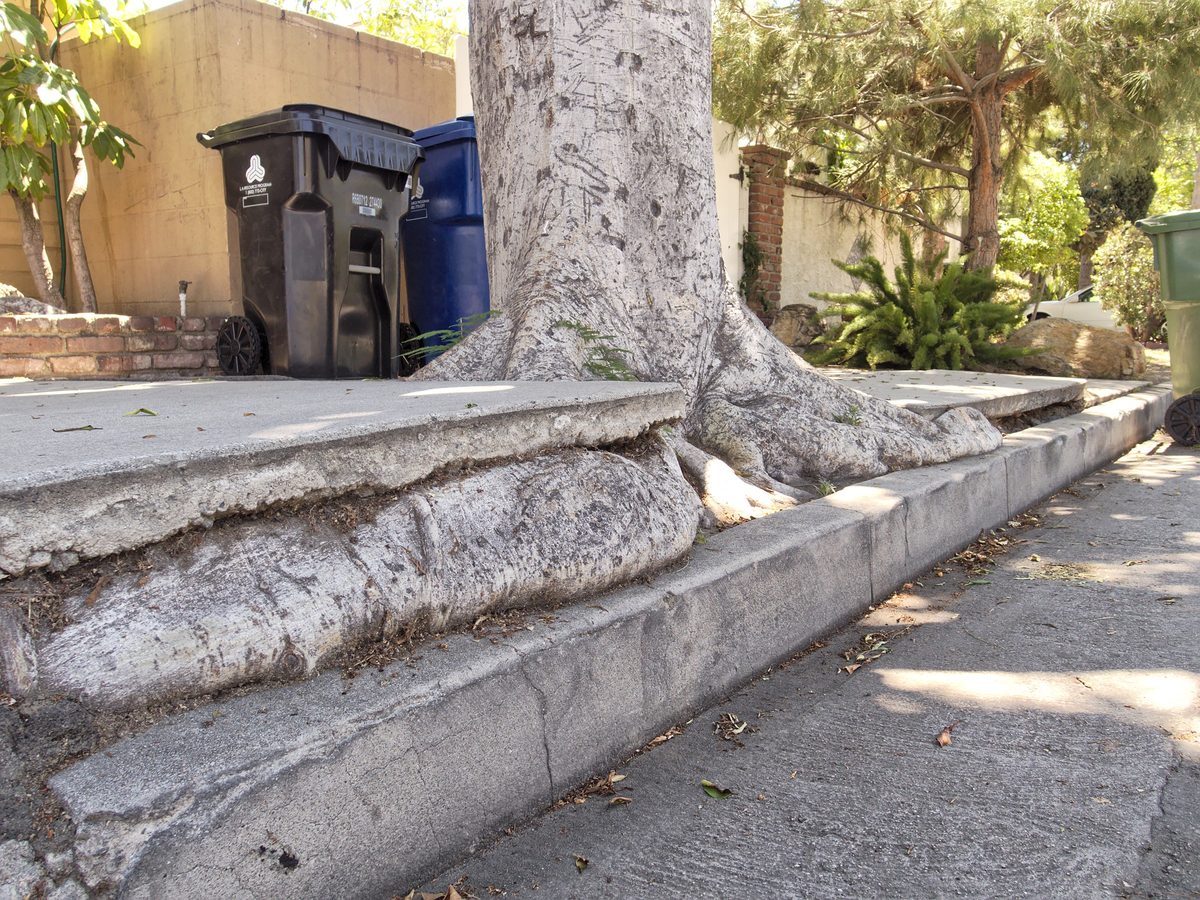
Round Rock driveways and sidewalks tend to fail along joints and at transitions. A panel sinks where it meets the garage, where the apron meets the street or where a tree root or an irrigation line has changed the soil beneath it. On the east side of I-35, clay under the base dries, shrinks and drops one panel while its neighbor stays put. On the hilly west side, runoff can wash out the base along the downhill edge. In older parts of the city, decades of tree growth also lift sidewalks. The result is a lip that catches feet, wheels and mower decks. Look at the joints for gaps where you can fit a coin. Gaps that wide often mean soil has been washing out for some time.
Leveling sunken panels with foam or slurry is often less disruptive than replacing them, but it depends on the cause. A raised panel pushed up by roots will not respond to lifting from below, and the roots may need attention from an arborist or the city. Sidewalk responsibility varies. Public sidewalks in the right of way may be handled by the city, or may be the homeowner's job, and many HOAs have their own rules. Check with the City of Round Rock before paying for repairs to a sidewalk along the street. Document the condition with photos and measurements first. Photographs showing trip hazards, with a ruler for scale, are useful when you contact the city about a sidewalk.
Look at the whole driveway, not just the worst panel. Water running down a sloped driveway can undercut the lower panels, and leveling one panel may shift the problem to the next. Ask the contractor to describe the plan panel by panel, including target heights and how water will drain afterward. A good finish includes patching the small holes and sealing the joints so water cannot return under the slab. If the concrete is cracked through or crumbling, replacement may make more sense, and a straightforward contractor will say so rather than lifting a failing slab. Walk the drive after lifting with a level and a hose, since small differences show up as puddles.
What to know in Round Rock
Slope and runoff along the drive
On a sloped Round Rock driveway, water can wash out the base along the lower edge. Lifting panels without addressing the runoff can lead to repeat settling. A channel drain at the top or a regraded edge may be part of a lasting repair. Channel drains or grading changes can be part of the job.
Raised versus sunken panels
Sunken panels can be lifted. Heaved panels, often pushed up by roots, need a different fix, such as cutting the root, grinding the edge or replacing the section. Make sure your contractor identifies which one you have before quoting a method. Cutting roots can harm a tree, so involve an arborist.
Right-of-way and HOA rules
Sidewalks and driveway aprons can fall inside the public right of way. The City of Round Rock may have rules about who repairs them and what approvals are needed. Your HOA may also have standards. A short call or email up front avoids surprises. Written approvals are worth keeping with your records.
Signs you may need driveway & sidewalk leveling
- Sidewalk squares that tilt or rock when stepped on
- Water pooling at the garage door or curb
- Gaps between the slab edge and the soil
- Hollow sound when tapping a panel
How driveway & sidewalk leveling works
Foam, or polyurethane, leveling is the most common choice for driveways in our work. The foam is a lightweight material that expands under the slab and hardens quickly. Contractor sources put its weight at roughly 2 to 4 pounds per cubic foot, and describe a cure measured in minutes. Holes run about five eighths of an inch. Mudjacking uses a heavier slurry of cement, soil and water through larger holes, with a longer wait before traffic returns. For a driveway, the cure time matters. If you need to move a car out of the garage the same day, a faster-setting material is helpful. Always ask how long to wait before parking on the repair, since panels that carry vehicles need the material to reach working strength.
Not every drop is the same. A panel that has simply dropped on one edge is a good candidate. A panel with a diagonal crack across the middle might separate when lifted, because the two halves behave as separate slabs. A panel with many hairline cracks may be fine. We read the pattern before we promise anything, because the cracks tell us how the concrete will react. Thickness also counts. Residential driveways are commonly four inches thick, though some are thicker near the garage. Thin concrete lifts with less margin for error, so injection is done slowly and the lift is measured as it happens. Cracks that run through a panel from edge to edge often split it into two slabs that move on their own, so we explain the odds of breakage plainly before work starts. A hairline crack that does not shift is usually fine to lift.
What to expect on a Round Rock visit
- 01
Survey the panels and joints
We walk the driveway or sidewalk and measure each step with a straightedge. Cracks, joint gaps and surface wear are noted. We also look at the roofline, irrigation heads and trees to find what is feeding the problem. A short list of the worst panels is written down, along with photos, so you can compare before and after.
- 02
Choose the lift approach
Depending on slab thickness, weight and the lift needed, we discuss foam or mudjacking and recommend the better match. For thin or heavily cracked panels we explain the risk of breakage and when replacement may be wiser. We also look at slab edges for spalling, since crumbling edges can break away when injection pressure rises.
- 03
Call 811 and mark holes
Texas811 gets the notice at least two business days before drilling. Meanwhile, we mark a hole pattern on each sunken panel so lift is spread evenly and nothing is drilled near known lines or reinforcing steel. Holes are generally set in a grid across the sunken panel, with extra points near edges where panels hinge downward.
- 04
Drill and inject gradually
Holes are drilled through the panel, and material is injected in small amounts. We track the rise with levels and string lines, moving between holes so the panel lifts flat instead of tipping. Foam is metered slowly, and if a panel starts to crack or rock, we stop and talk through whether to continue.
- 05
Match adjacent panels
Each panel is raised to meet its neighbors, with attention to drainage direction. A driveway has to shed water away from the garage, so we confirm the final slope instead of just closing the gap. We test drainage with water and check the apron by the garage door, where even a small reverse slope can send water inside.
- 06
Patch holes and set the cure window
Holes are patched, and the surface is cleaned. We explain how long to keep vehicles off the panels and which water source to fix so the repair stays level. Keep cars, trailers and delivery trucks off the repaired panels until we tell you the cure window has passed. A quick walk-through at the end confirms nothing was missed.
Our approach in Round Rock
- We walk the property in Round Rock and trace where water comes from, where it collects and where it can legally go
- We explain what we find in plain language, with photos where they help
- Repairs and installs are planned around Williamson County permitting requirements
- You get written options before any repair work begins
- We call 811 to mark buried utilities before any digging
Soil and drainage conditions around Round Rock
Round Rock grew up as a farm and cotton town. Blackland soils were well suited to cotton, and the railroad and later the interstate tied the town to Austin and Dallas. Modern Round Rock is a very different place, a large suburb with older neighborhoods near the historic downtown, 1980s and 1990s subdivisions, and newer communities toward the edges. Older homes often have original concrete patios and driveways that have lived through decades of wet and dry cycles, and some have gutters that dump right at the slab. Newer homes on smaller lots leave less room for water, and fences and landscaping can trap it. If you bought a home here, ask when it was built and whether the lot was regraded. That single fact tells us a lot about what to expect.
Driveway & Sidewalk Leveling questions from Round Rock homeowners
Can a tilted driveway in Round Rock be fixed without replacing it?
Often yes, if the concrete itself is in good shape. Foam or slurry can raise sunken panels back to level. If the panels are cracked into pieces or crumbling, replacement may be better. A contractor can check the condition of each panel and the cause of the sinking. Ask for the option to lift some panels and replace others.
Why is my sidewalk lifted instead of sunken?
Raised panels are often pushed up by tree roots, and sometimes by swelling clay. Lifting from below does not fix that. Options include trimming or removing the root, grinding the edge flush for a short-term fix or replacing the panel. Ask the city and an arborist before cutting roots on a street tree. Tree roots under the driveway edge can lift it as well.
How long does a leveled driveway last?
It depends on the cause of the original settling. If water, roots or poor base soil keep acting on the slab, voids can form again. Foam resists washout, but it cannot stop clay movement. Fixing drainage and sealing joints improves the odds. No one can promise exactly how clay will behave. Photos of the lifted surface give you a baseline.
How soon can I drive on the repair?
Foam generally cures in minutes, but vehicle traffic puts heavy load on the slab, so confirm the wait time for your job. Mudjacking needs more time to set. Ask the contractor for a clear window and keep vehicles off until it passes. If you have a heavy truck or trailer, tell the contractor, since those loads need a longer wait than a family car.
Who is responsible for a public sidewalk?
It depends on your city. Some cities handle repairs, and others place the duty on the adjacent owner. Rules also differ for curb aprons. Call your city public works office or check its ordinances, because we cannot state your city's specific policy. If your sidewalk is in the public right-of-way, ask your city whether it offers a repair program before you pay for the work.
Why does the same panel keep sinking?
An active water source is the usual reason. A downspout, sprinkler head or low spot can wash soil out from under the panel again and again. Fixing the water source is the best way to keep the lift. Tree roots drying the clay can also play a role. A quick sprinkler audit often reveals the cause, so run each zone and watch the edges of the drive for runoff.
More about driveway & sidewalk leveling → · All services in Round Rock →
Need driveway & sidewalk leveling in Round Rock?
Call or send a request. We will look at where the water goes, check the grade and give you a written estimate.