Cedar Park · Williamson County
Dry Wells & Pop-Up Emitters in Cedar Park, TX
Dry wells are tricky over limestone. The rock can limit depth and may allow water to travel in unexpected directions, and clay pockets drain slowly. Near the Edwards Aquifer recharge zone, extra care applies. We test the site first and often prefer pop-up emitters or surface outlets instead of a dry well. Because rock can end a dry well design early, ask for alternatives such as an emitter in the plan from the start.
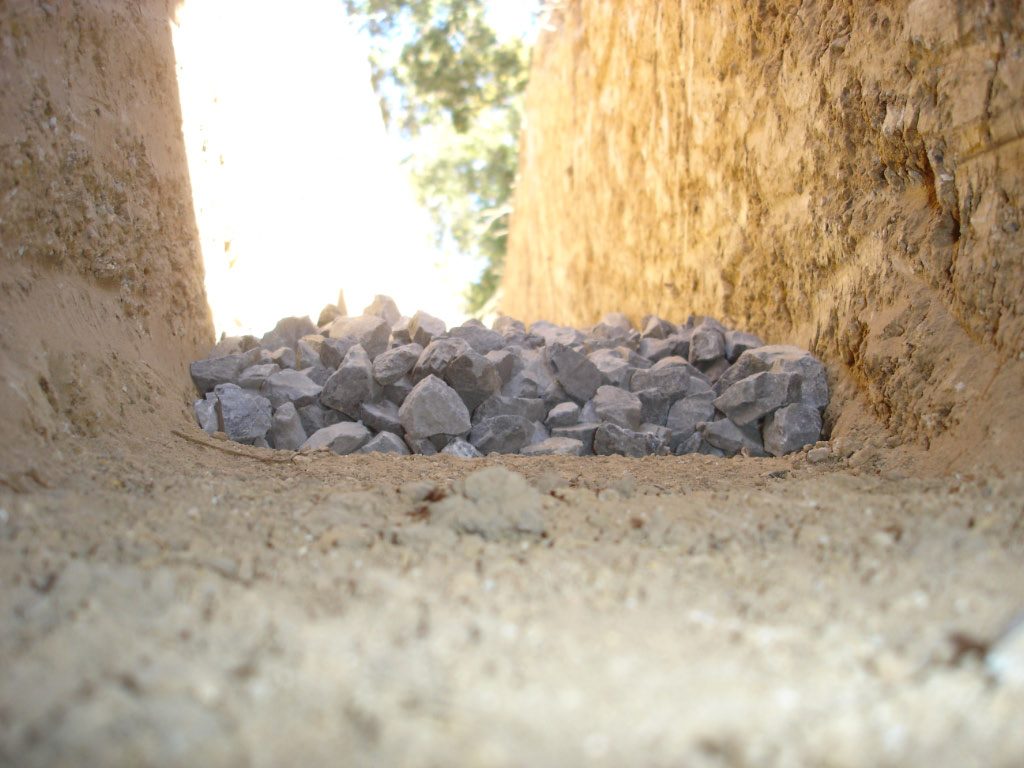
Dry Wells & Pop-Up Emitters for Cedar Park homes
A dry well takes roof or yard water into an underground chamber and lets it seep into the ground. A pop-up emitter is a simpler option, a small cap on the end of a buried pipe that opens when water pushes through. In Cedar Park, these tools have to be chosen with care, because the rock under the soil changes how water behaves. Limestone is fractured and can carry water downward and sideways quickly. In other spots, a pocket of clay or a solid shelf of rock stops water, and a dry well fills and stays full. The right choice depends on what is under your particular lot. A good installer explains which of the two fits your lot, and may suggest a different approach entirely if the ground will not accept the water.
That variability is why a simple soak test matters. Dig a hole about a foot wide and two feet deep, fill it with water and time how long it takes to empty. If it drains in a few hours, the spot may suit a dry well. If rock stops your digging at six inches, a well may not fit at all, and an emitter on a sloped lawn may work better. There is another concern in limestone country. Cedar Park has karst features, including documented caves west of town in the Buttercup Creek area, and sending concentrated water into the fractured rock near them is a poor idea. Write down the test result and the date, because a test after a wet week gives a very different answer than one done after a long drought.
Check the rules before you build. Parts of the region fall under Edwards Aquifer protection rules, and Cedar Park follows the Austin Drainage Criteria Manual, so ask the city whether your lot has any restriction on disposal points. TCEQ can answer aquifer questions. Call 811 at least two working days before digging. Keep any dry well well away from the foundation, a retaining wall, a septic system and the property line. If a void or cave opening appears while you dig, stop and call the city. Do not try to fill it with gravel or concrete yourself. Mark the location on a sketch of the lot and keep it, since a buried tank is easy to forget and easy to damage when someone digs later for a new fence post.
What to know in Cedar Park
Karst and fractured rock
In cave-bearing limestone areas, water that enters a fracture can travel a long way with little filtering. That is a concern for aquifer protection and for stability near voids. Ask the city or TCEQ whether your lot is in a mapped sensitive zone before adding a disposal point, and avoid sending water toward any known cave or sinkhole.
Emitters on slopes
A pop-up emitter works well on a gentle slope where water can spread across grass. On a steep hillside the water can run fast and cut a channel. Place the emitter where the ground flattens, add a rock splash pad if needed and point it away from the neighbor's lot and any retaining wall.
Test before you dig
Soil depth on Cedar Park lots changes within a few feet. One test hole at the back fence tells you little about the side yard. Test the exact spot where the well would go. A hole that stays full, or hits rock quickly, is a signal to pick another location or a different method.
Signs you may need dry wells & pop-up emitters
- An existing dry well or pit that stays full for days after rain
- Gurgling, backed-up drains or downspouts during storms
- A pop-up emitter that is buried, cracked, or stuck shut
- Runoff streaming toward a neighbor's fence or yard
How dry wells & pop-up emitters works
Where the water is released matters in law and in practice. Under Texas Water Code Section 11.086, you cannot divert or impound the natural flow of surface water in a way that damages another person's property by overflow. An emitter that sprays onto a shared fence line or a neighbor's patio could create that kind of claim, while a dry well that overflows toward the next lot could do the same. Locating the outlet well inside your own lot, aiming it along the natural slope, and leaving a clear overflow path across your own yard are the simplest ways to stay on the right side of that rule. If a dispute arises, a lawyer can advise you. Keeping written notes of where each outlet points is helpful if a neighbor ever raises a concern.
Placement, depth, and safety round out the planning. A dry well should sit well away from the foundation, commonly at least ten feet and often more, and away from septic fields, wells, and property lines. Depth is limited by what lies below: utilities, rock, and groundwater. Texas law requires a call to Texas811 at least two business days before digging, and that applies to homeowners. Rules for dry wells and for discharge to the street differ by city, and some HOAs review visible emitters, so check with your city or HOA before you commit to a design. A short written plan keeps everyone aligned. Keep a copy of any approval and a sketch of the layout with your home records, so a future owner knows what was built and where.
What to expect on a Cedar Park visit
- 01
Decide whether the soil can take it
We dig a test hole where the dry well would go, fill it with water, and time how fast it drops. Slow results in clay tell us a dry well will not drain, and we recommend an emitter or daylight outlet instead. This one step prevents the most common and costly dry well failures. Results are shared with you.
- 02
Choose the outlet type and location
Based on the soil, slope, and lot size, we pick a dry well, a pop-up emitter, or a combination. We place the outlet well inside your property, away from the foundation, septic components, and neighbors, and we plan a clear overflow route across your own lawn for very heavy storms. We mark the plan on a sketch for you.
- 03
Call 811 and mark the work area
Texas law requires a call to 811 at least two business days before digging, excluding weekends and holidays. Public utilities mark their lines for free. We also paint the pipe route and well location, and we check for private irrigation lines and tree roots that could change the layout. We also confirm how deep the line sits.
- 04
Excavate and build the structure
For a dry well, we dig the pit, line it with filter fabric, and set a perforated chamber or fill it with washed stone. For an emitter, we trench the pipe on a steady downhill slope and set the fitting flush with the lawn. All connections are sealed and bedded on compacted material.
- 05
Connect inflow and add overflow protection
Pipes from downspouts or drains enter the top of the well or the start of the emitter line. A dry well gets an overflow pipe or a surface path in case it fills. We add cleanouts and, where useful, a small silt-catching basin ahead of the well to protect it. Everything is labeled on the sketch.
- 06
Test, backfill, and explain the upkeep
We run water through the whole system, check the speed of the outlet, and watch for leaks. Then we backfill in layers, restore the lawn, and show you how to check the emitter cap, clear debris, and tell if a well is draining or staying full after storms. You get a simple sketch of the finished layout.
Our approach in Cedar Park
- We walk the property in Cedar Park and trace where water comes from, where it collects and where it can legally go
- We explain what we find in plain language, with photos where they help
- Repairs and installs are planned around Williamson County permitting requirements
- You get written options before any repair work begins
- We call 811 to mark buried utilities before any digging
Soil and drainage conditions around Cedar Park
Problems in Cedar Park usually involve water running or seeping where it should not. Downspouts empty onto slopes and erode the soil. Water sits on the rock layer and appears as wet patches in yards below. Retaining walls hold back water that has no way out. Sidewalks and driveways crack where fill meets rock. Patios sink where erosion cuts voids under them. Fixes include French drains that catch seepage, buried downspout lines, catch basins at the base of slopes, swales and selective regrading. Foam leveling lifts settled concrete, and sealing slows water entry at joints. If you notice stair-step cracks or sticking doors, a structural engineer or foundation repair company should evaluate the house. We do not do piers or structural repair, but we can improve the water control around the home.
Dry Wells & Pop-Up Emitters questions from Cedar Park homeowners
Do dry wells work on rocky ground?
They can where fractured limestone drains well, but they will not work where solid rock sits just under the surface, since there is no room to dig. In that case an emitter or a surface outlet is usually better. Test the exact spot first, and ask the city whether your lot has any karst or aquifer limits. A quick test and a short call to the city can save a failed installation.
How big should a dry well be?
Size depends on the roof area it serves, how fast the soil drains and the size of storm you want to handle. A small home with one downspout needs far less than a large roof with several. Under-sizing leads to overflow near the house. A pro can calculate volume from your roof and soak test results. Larger roofs and flatter lots usually need a bigger chamber or a second outlet.
What if I find a hole or void while digging?
Stop digging and keep people and pets away from the opening. Do not fill it with water, dirt or concrete on your own. Call the City of Cedar Park to report it, and ask whether TCEQ or another agency needs to be notified. Voids in limestone can be linked to caves or to the aquifer, so they deserve care. Take photos of the opening from a safe distance, and note the date, so the city has a clear record.
How far from my house should a dry well be?
Commonly at least ten feet, and farther on clay soils or small lots when possible. The well should also stay away from septic systems, private water wells, utility lines, and property lines. Local rules and the soil on your lot may set different requirements, so check with your city or HOA, and follow any recommendation from your installer. Ask your installer to mark the distance on the plan.
Do I need to call 811 before installing a dry well?
Yes. Texas law requires notice to Texas811 at least two business days before digging, not counting weekends or holidays, and this applies to homeowners as well as contractors. Public utilities mark their lines for free. Private lines such as irrigation and lighting often are not marked, so tell the crew about them. Call early so your start date is not delayed.
Can my emitter send water onto my neighbor's lot?
It should not. Texas Water Code Section 11.086 prohibits diverting or impounding the natural flow of surface water in a way that damages another person's property. Keep outlets well inside your lot and aimed along the natural slope. If you have a dispute, talk with a lawyer, since this page is general information and not legal advice. Dated photos of the outlet help in any dispute.
More about dry wells & pop-up emitters → · All services in Cedar Park →
Need dry wells & pop-up emitters in Cedar Park?
Call or send a request. We will look at where the water goes, check the grade and give you a written estimate.