Manor · Travis County
Foundation Drainage in Manor, TX
In Manor, steady moisture around the slab is the goal, since Houston Black swings so much with the weather. Perimeter drains and correct grading help keep water from collecting at the foundation. We do not perform structural repair. A structural engineer or foundation company should evaluate cracking, sticking doors or sloping floors. Gutters and grading are checked first, since they give the best return.
Foundation Drainage for Manor homes
Foundation drainage is about managing the water around a house so the soil under it stays more even in moisture. In Manor, that matters because Blackland clay swells when wet and shrinks when dry. Those swings push and pull on a slab. Drainage does not repair a foundation, and we do not do structural foundation repair. What drainage does is reduce one of the main forces that move a slab, which is uneven moisture in the clay around it. That makes it a smart partner to any repair, or a smart precaution if the house is still stable. On a Manor slab, the first line of defense is usually cheap: gutters in good shape, downspouts that discharge at least several feet from the wall, and soil that slopes away. These steps handle most surface water without any digging near the house.
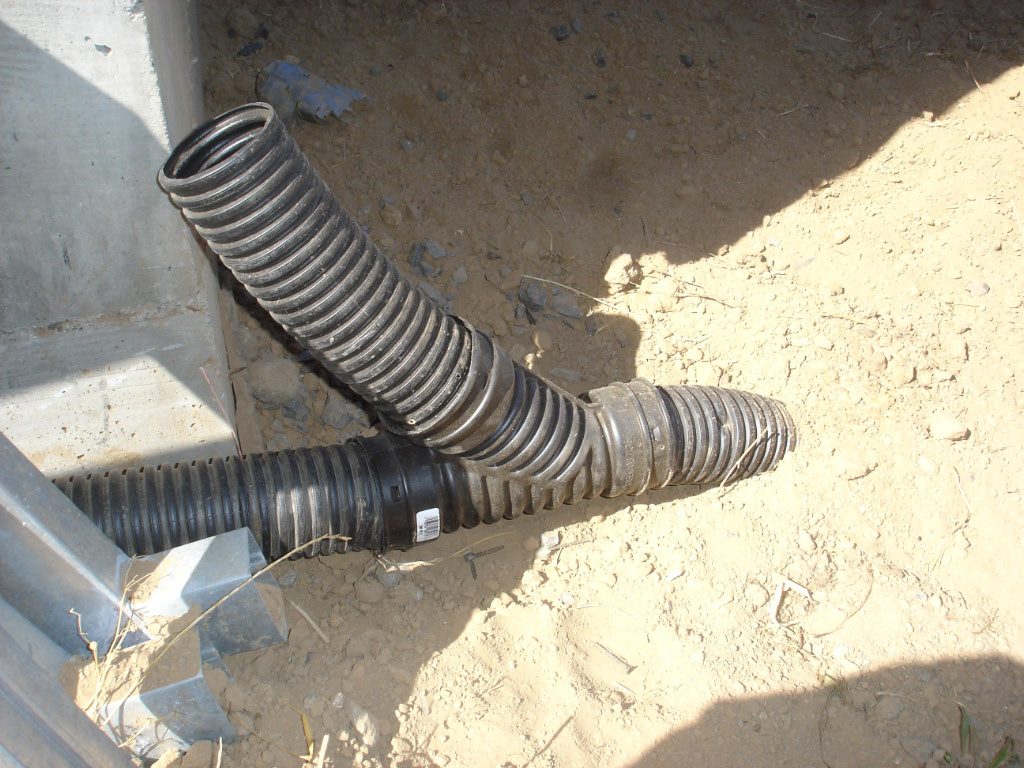
A perimeter system usually includes several pieces. Gutters and downspouts carry roof water away, grading directs surface water off the lot, and a French drain or curtain drain along the edge catches water that would otherwise sit beside the slab. Most Manor homes are slab-on-grade with no basement, so a drain at the footing is less common than a shallow drain a few feet out from the wall. The right design depends on the lot, the soil and where the water is coming from during a storm. Where water still reaches the wall, a shallow drain placed a few feet out, and tied to a solid outlet line, can intercept it. We keep trenches clear of footings and plumbing stub-outs, and we use hand tools near the slab edge.
If you see doors that stick, new cracks above windows, or gaps between the wall and trim, have a structural engineer or a foundation repair company evaluate the house first. They can tell you whether the slab has moved and by how much. Then drainage becomes part of protecting the repair. Summer drought matters in Manor too, because dry clay shrinks away from the slab and leaves gaps. Some owners water the soil near the foundation during dry spells. Ask your engineer before starting that, since overwatering causes its own problems. Keep records. Date-stamped photos, crack measurements and an engineer's report make it easier to track changes over time. They also help if you ever sell the house, since buyers often ask about drainage and foundation history.
What to know in Manor
Get a structural opinion first
If you suspect foundation movement, a structural engineer should evaluate it before any drainage work. They measure slab elevation and tell you whether repair is needed. We handle the water side of the problem. We do not do piers or slab lifting under the house. Ask the engineer to note if drainage or moisture seems to be a factor in their report.
Dry spells hurt too
In a Manor drought, clay can shrink and pull back from the slab, leaving gaps. Then a storm sends water straight down along the edge. Good drainage keeps water moving away, while steady moisture near the foundation, guided by your engineer, can limit the swings. Some Manor owners use a soaker hose on a timer in dry months, but only after an engineer confirms it fits their house.
Trees and roots near the slab
Large trees pull water out of clay and can dry it unevenly beside the foundation. Newer Manor lots have young trees now, but they grow fast. Keep large species well away from the house, and consider a root barrier if a mature tree already stands close to the slab. Plan landscaping with the slab in mind, and place water-loving plants away from the wall.
Signs you may need foundation drainage
- Gaps opening between the soil and the slab edge in dry weather
- Mud or standing water in a planter bed or porch against the wall
- Soggy lawn strips that always sit along one side of the house
- Cracks, sticking doors or sloping floors that call for an engineer first
How foundation drainage works
When grade and gutters are not enough, a perimeter drain may help. This is a trench along the part of the house where water collects, lined with fabric, filled with washed gravel, and fitted with a perforated pipe that carries water to a safe outlet. It is closely related to a French drain, but placed with the foundation in mind. The trench stays shallow enough that it does not undermine the footing, and it is kept a sensible distance from the slab edge. Where water cannot drain by gravity, a sump basin with a pump can lift it to a discharge point. Outlet location matters as much as the pipe. The best drain in the world fails if it dumps onto a neighbor's lot or into a low corner with nowhere to go. We plan the outlet first, then work backward to the trench.
Be careful with any claim that drainage alone will fix a damaged foundation. It will not. Drainage reduces one of the forces acting on a slab. It cannot undo cracks, uneven floors or stuck doors that have already developed. If you see stair-step cracks in brick, doors that rub their frames, gaps between walls and ceilings, or floors that slope, call a licensed structural engineer or a foundation repair company first. Many homeowners get an independent engineer's report so they have an unbiased view of what the slab needs. Once the structure has been evaluated, drainage becomes the maintenance side of the plan. A repaired foundation that keeps getting soaked on one side can move again. A stable foundation with good drainage is more likely to stay that way.
What to expect on a Manor visit
- 01
Walk the property in dry and wet conditions
We start by looking at the roofline, gutters, downspout outlets and the ground within about ten feet of the slab. Where possible we look right after rain, because puddles, soft spots and stained concrete show exactly where water travels and where it stops. Photos of gutters, stains and puddles go into your file so we can compare conditions after the work.
- 02
Check the slope and find the low points
Using a level and string line or a laser, we measure how the ground falls away from the house. We note where beds, walkways or patios hold water against the slab, and mark where the soil has settled below the original grade line. Low spots next to the slab are flagged first, since they usually matter more than gentle slopes elsewhere in the yard.
- 03
Plan the outlet before the pipe
Water needs a legal, safe place to go. We pick a daylight outlet, a street-side discharge, a dry well or a pop-up emitter, and confirm it will not push runoff onto a neighbor. You are also told to check HOA and city rules on easements. If a pop-up emitter is the choice, we explain how it opens under flow and drops back flush so mowers pass over it.
- 04
Call 811 and mark the work area
Texas811 must be notified at least two business days before digging, and the utilities mark their buried lines. We keep the trench clear of those marks and of irrigation lines, then lay out the path with paint so you can see it first. Irrigation lines are common in this area, so we ask where your zones run and whether a shutoff is accessible.
- 05
Excavate, lay pipe and backfill
The trench is cut to a steady fall, lined with fabric, bedded with washed gravel and fitted with solid or perforated pipe depending on the job. Spoil is hauled or used for regrading. Cleanouts are added where they help future maintenance. A cleanout riser at the corner makes it easy to flush the line later and check that water is still moving.
- 06
Regrade, test and restore
We shape soil so it falls away from the slab, then run water through the system to confirm flow reaches the outlet. Sod, mulch or rock goes back, and we walk you through where the pipes run and how to keep inlets clear. Keep the new grade in mind when you plant or add mulch, because piling soil back up against the slab undoes the work.
Our approach in Manor
- We walk the property in Manor and trace where water comes from, where it collects and where it can legally go
- We explain what we find in plain language, with photos where they help
- Repairs and installs are planned around Travis County permitting requirements
- You get written options before any repair work begins
- We call 811 to mark buried utilities before any digging
Soil and drainage conditions around Manor
Local rules matter. Many Manor neighborhoods have HOAs with approval processes, and some lots sit on recorded drainage easements where changes may need city review. We cannot state the City of Manor's grading and permit requirements, so contact the city and your HOA before you start. Texas Water Code Section 11.086 makes it unlawful to divert or impound natural surface water so that it damages a neighbor's property, so your drain outlet should go to the street, a proper swale or an approved point. If a dispute develops, see an attorney. Texas law also requires everyone, homeowners included, to contact Texas811 at least two business days before digging. With gas, water, electric and fiber lines being added as Manor grows, that call is worth making every time. Keep your approval letters and 811 ticket number together in one folder so you can show them if a neighbor or the city asks.
Foundation Drainage questions from Manor homeowners
Can drainage fix a foundation problem in Manor?
Not by itself. Drainage controls water around the house, which helps keep the clay more stable. If the slab has already moved, you need a structural engineer or foundation repair company to evaluate it. After repairs, good drainage helps protect the work and slow future movement. Photos taken at the same spot every few months show change that is easy to miss day to day.
What are signs of foundation movement in a Manor home?
Look for drywall cracks that start at door and window corners, doors that rub or will not latch, cracks in brick, and gaps along baseboards. One small crack can be normal settling. A pattern that grows over several months deserves a call to a structural engineer. If your gutters are full of water at the wall, extending them is a cheap first step.
Where should the soil sit against my slab?
Soil should slope away from the house and sit several inches below the top of the slab or the brick ledge, so water does not wick into the framing. Ground that touches siding invites moisture and termites. A shallow dip right beside the house is a common spot for water to collect. A bed of mulch that stays wet against siding is a sign that drainage needs attention.
Is a French drain the same as foundation drainage?
They overlap. A French drain is a gravel trench with a perforated pipe, and a perimeter version near the house is one tool in foundation drainage. A complete plan also covers gutters, downspouts and grading, because piping hidden water will not help if roof runoff keeps pouring against the slab. Both are drains, but perimeter versions must be kept at a safe distance so the trench does not disturb the footing.
Should I water my foundation in summer?
It is debated. Some owners run soaker hoses to slow clay shrinkage, but uneven watering can cause its own movement. Most of the advice online comes from contractors. Ask a structural engineer or foundation repair company about a pattern that fits your slab, and keep water from pooling at the edge. If you do water, never leave a hose running in one spot, and stop if you see runoff reaching the street.
Do I need to call 811 before a drain is installed?
Yes. Texas requires notice to Texas811 at least two business days before digging, not counting weekends or holidays. This applies to homeowners too. If you hire a contractor, the contractor places the call, and you can ask for the ticket number to confirm it was done. Marking paint and flags usually appear within a couple of business days, so build that wait into the schedule.
Need foundation drainage in Manor?
Call or send a request. We will look at where the water goes, check the grade and give you a written estimate.