Manor · Travis County
Catch Basins & Channel Drains in Manor, TX
Catch basins and channel drains collect surface water where grading alone cannot move it, such as at a patio edge, the foot of a driveway or a low corner. In Manor, they pair well with a buried pipe that runs to a legal outlet. We size grates and pipe for a heavy downpour, not a light shower. Keep the grate free of leaves and silt after storms.
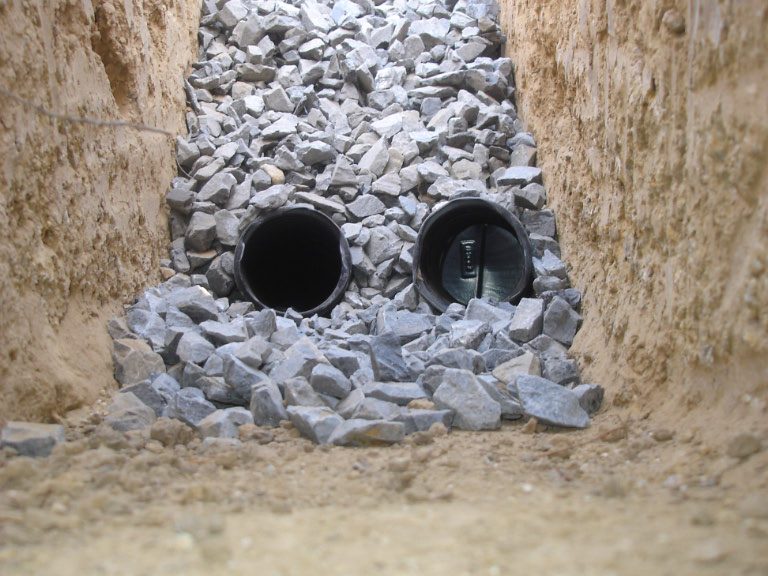
Catch Basins & Channel Drains for Manor homes
A catch basin is a box set in the ground with a grate on top. It collects surface water from a low spot and sends it into a buried pipe. A channel drain is a long, narrow version of the same idea, set into the edge of a driveway, a patio or a garage threshold. In Manor, where clay soil sheds water instead of absorbing it, these collectors are often the only way to clear a spot where water pools after storms and then lingers for days. After a storm, look for a ring of silt or a line of leaf debris on the ground. That mark shows where water slowed and dropped what it carried, and it often points to the exact spot where a basin belongs.
The most common use in Manor is a low corner of a backyard where two fence lines meet. Rain runs downhill from both neighbors and stops there, and the clay holds it. A catch basin at the low point, connected to solid pipe that leads out to the street or a swale, ends the pond. Channel drains work well across the base of a driveway that slopes toward the garage door, and along the back of a patio slab where stormwater would otherwise run back toward the house. Where a driveway slopes toward the house, a channel drain across the bottom picks up water before it reaches the garage door. Choose a model with a deep enough trough to handle heavy rain and a grate that locks in place.
Size matters. A basin with a small grate can clog with leaves in a single storm, and a basin that is too shallow cannot carry much flow. We choose the basin and the pipe size based on how much area drains into it. A basin also needs somewhere to send water, so the outlet question comes first. Add Texas811 locates before digging, and ask your HOA whether visible grates are allowed in front yards. A grate in a lawn is easy to hide with sod or low plants, but it must stay clear. Plan a way to reach the basin for cleaning. A grate that is buried under mulch is the same as no grate. Many Manor owners set a flat paver or river rock ring around the grate to mark it and keep soil out.
What to know in Manor
Grate load rating
A grate on a walkway needs less strength than one on a driveway where trucks and trailers roll over it. Manor driveways often hold work trucks and boats. Pick a grate rated for the traffic it will see, or it can crack or sink and become a trip hazard. Bring up how the grate will look to the HOA, since some prefer low-profile black or bronze finishes.
Silt from bare clay
Runoff from bare clay carries fine silt, and it settles in the basin sump. New Manor lots with young sod shed more silt than established lawns. Plan to pull the grate and scoop out the basin a few times a year, especially after the spring storms that bring the heaviest rain. Add a sediment sump to the basin so silt drops out before it reaches the pipe.
Outlet capacity
Collecting water is only half the job. The pipe after the basin has to carry it away, and the exit must be a place where water is allowed to go. Check with the city or HOA before tying into curbs or storm inlets, and avoid sending flow toward a neighbor's yard. Test the outlet with a hose after install and watch it run before the trench is closed.
Signs you may need catch basins & channel drains
- Mud, sediment, or sand washing across hard surfaces
- An existing drain grate that overflows or stays full
- Wet or stained concrete at the base of a wall
- Ponding at the bottom of a sloped yard after short storms
How catch basins & channel drains works
In clay soil, surface drains matter for a simple reason. The Blackland Prairie clay east of I-35 absorbs water slowly, so rain often runs across the surface instead of soaking in. Compacted construction fill around new homes makes this worse, because it behaves almost like pavement when it is wet. That means a patio, a side yard, or the low end of a sloped lawn can collect large volumes of water in minutes. A catch basin or channel drain catches this runoff quickly, before it saturates the soil along the slab, and it can do so without trenching up the whole yard like a long French drain might. Pairing the basin with a corrected slope keeps the water moving into the grate instead of around it.
Choosing between a basin, a channel drain, and other options starts with where the water comes from. If you have a single bowl-shaped low spot, a catch basin is often enough. If water runs across a hard surface, toward a garage door or a patio threshold, a channel drain across the path is typically the better choice. If water is seeping up from wet soil, not running over it, a French drain is the better answer. Many yards need two or three of these working together, with the surface drains tied into the same buried pipe network, and the whole plan designed so every piece has somewhere to send its water. Walking the yard in a rainstorm, with a phone camera, is the easiest way to see which type fits.
What to expect on a Manor visit
- 01
Find the low spots and flow paths
We watch how water moves across your lot during or after rain, marking where it collects, where it crosses hard surfaces, and where it should leave. We also check the existing slope of patios and drives. This tells us whether a basin, a channel drain, or both are the right tools for your yard.
- 02
Size the system to the water
We estimate how much roof, paving, and lawn drains toward each point, then choose a grate size and pipe diameter that can handle it. Four-inch pipe works for many small yards, while larger areas call for six-inch. Sizing too small is the most common reason a drain overflows in a hard rain.
- 03
Call 811 and plan the outlet
Texas law requires a call to 811 at least two business days before digging, not counting weekends and holidays. We then confirm the outlet: a lower part of your lot, a pop-up emitter, a dry well, or an approved street connection. City and HOA rules differ, so we check before any trenching begins.
- 04
Excavate and set the basin or channel
The hole or trench is dug to the depth needed, and the base is leveled on compacted gravel so the unit does not settle. The grate is set slightly below the surrounding grade so water flows into it. Channel drains are set to a gentle slope, and they are anchored with concrete when they sit in a slab.
- 05
Connect solid pipe and add cleanouts
Solid pipe leaves the basin or channel and runs downhill to the outlet, joined with proper fittings and sealed at the connection. Cleanouts are added at turns so the line can be flushed. We run water into the system before backfill to check for leaks, standing water in the pipe, and the speed of flow.
- 06
Backfill, finish, and show you the upkeep
The trench is backfilled in layers, the surface is graded to feed water into the grate, and sod or concrete is restored. We then show you how to remove the grate, check the sump, and clear debris, so you know exactly what a simple spring and fall cleaning looks like. Ask to see it done once.
Our approach in Manor
- We walk the property in Manor and trace where water comes from, where it collects and where it can legally go
- We explain what we find in plain language, with photos where they help
- Repairs and installs are planned around Travis County permitting requirements
- You get written options before any repair work begins
- We call 811 to mark buried utilities before any digging
Soil and drainage conditions around Manor
Local rules matter. Many Manor neighborhoods have HOAs with approval processes, and some lots sit on recorded drainage easements where changes may need city review. We cannot state the City of Manor's grading and permit requirements, so contact the city and your HOA before you start. Texas Water Code Section 11.086 makes it unlawful to divert or impound natural surface water so that it damages a neighbor's property, so your drain outlet should go to the street, a proper swale or an approved point. If a dispute develops, see an attorney. Texas law also requires everyone, homeowners included, to contact Texas811 at least two business days before digging. With gas, water, electric and fiber lines being added as Manor grows, that call is worth making every time. Keep your approval letters and 811 ticket number together in one folder so you can show them if a neighbor or the city asks.
Catch Basins & Channel Drains questions from Manor homeowners
What is the difference between a catch basin and a channel drain?
A catch basin is a box that collects water at one spot, like the low corner of a yard. A channel drain is a long slot that intercepts sheet flow across a driveway, patio or door threshold. Both connect to buried pipe. We pick the one that matches how the water actually arrives. If you have both a wet yard and a pooling patio edge, you may need one of each.
Will a catch basin stop standing water in my Manor yard?
It will if the basin sits at the lowest point and the outlet pipe has fall to a legal exit. If the water is rising from the ground instead of running in from the surface, a French drain may be needed too. Watching one full storm cycle usually shows which problem you have. If a basin overflows, the outlet pipe may be too small or partly blocked, so flush it with a hose.
How often should I clean a channel drain?
Check it after big storms and at least a few times a year. Leaves, mulch and silt gather faster than most people expect. Lift the grate, scoop out the debris, and run a hose through the channel to confirm that water flows freely out of the far end. Dispose of the debris in the trash rather than the yard, where it can wash back toward the grate.
How often do catch basins need cleaning?
Check them at least twice a year, in spring and fall, and after big storms. Remove the grate, scoop out silt and leaves from the sump, and flush the pipe with a hose. Under trees or in clay-heavy yards, you may need to clean more often. A basin that is never cleaned will eventually stop working. Fine clay silt hardens, so clean it while it is soft.
Do I need to call 811 before installing a drain?
Yes. Texas law requires anyone who digs, including homeowners, to notify Texas811 at least two business days in advance, excluding weekends and holidays. Public utilities mark their lines for free. Private lines such as irrigation or lighting wiring usually are not marked, so tell the crew about anything you know is buried. Call early so your start date is not delayed.
Can a drain be installed in existing concrete?
Yes, but it takes more work. The slab is saw cut, the concrete removed, the drain set at the correct slope, and new concrete poured around it. The patch is visible, and it needs time to cure. When possible, placing the drain at the edge of the slab in soil reduces cost and keeps the original surface intact. Ask how the patch will look.
More about catch basins & channel drains → · All services in Manor →
Need catch basins & channel drains in Manor?
Call or send a request. We will look at where the water goes, check the grade and give you a written estimate.