Taylor · Williamson County
French Drain Installation in Taylor, TX
A French drain in Taylor catches water from a wet low spot and carries it through a fabric-wrapped gravel trench to an outlet. The flat land makes the outlet the hardest part, so we plan the pipe slope backward from the discharge point. In older yards, we watch for old lines, roots and buried debris after 811 marks utilities. A probe rod along the proposed line finds old pipes and debris before we dig.
French Drain Installation for Taylor homes
Taylor was built on some of the best farmland in Central Texas, and the soil shows it. The town sits in the Blackland Prairie, where deep, dark clay such as Houston Black is the norm. That clay is great for growing cotton and grain, and it is hard on yards. It drinks water slowly, swells as it gets wet, and cracks wide open in a dry summer. A French drain gives rain that cannot soak in a way to leave the lot, instead of sitting in the top foot of soil for days. A simple clue that you need one is a lawn strip that stays green and soft in August while the rest of the yard browns. Another is a puddle that forms in the same corner after every storm and takes more than two days to disappear. Mark that spot before you plan anything.
Taylor is also flat. Fields stretch out in every direction, and many neighborhoods, old and new, have very little natural slope. That makes the outlet the hardest part of any French drain design. The pipe has to keep falling, and in a town this level the fall runs out fast. We look for a roadside ditch, a street inlet, or a grassy swale that carries water away, then work backward from there. If no good outlet exists, a pop-up emitter or a sump basin may be the practical answer. The Samsung fab construction south of downtown and new subdivisions around it are changing how water moves across the area, since roads, roofs and parking lots shed water faster than open fields. Ditches and street inlets that once handled farm runoff now carry more, so check capacity with the city.
Taylor's older streets near downtown have small lots and long-established trees, so the trench route has to avoid roots, sewer laterals and old water lines. Always call 811 at least two business days before digging. Check with the City of Taylor and your HOA, if you have one, before sending water toward a ditch or street. Texas Water Code Section 11.086 also bars diverting surface water onto a neighbor in a harmful way, so the outlet must stay on your side of the line. Gravel size and fabric matter more in black clay than most people expect. Washed three-quarter inch rock wrapped in a non-woven filter fabric keeps the pipe open for years. Skipping the fabric to save a little money is the most common reason these drains silt shut.
What to know in Taylor
Flat ground, short fall
With very little natural slope, the number of feet between the drain and its outlet decides what is possible. A common target is about one inch of drop per eight feet of pipe. On a long, flat run you may run out of depth before you reach the ditch, so plan the whole route first. Walk the full route first, and flag it with paint so you can see where the pipe will fall.
Roadside ditches belong to someone
Ditches along Taylor streets and county roads may be maintained by the city, the county or TxDOT, and connecting a pipe to one can need approval. Do not assume an open ditch is fair game. Call the City of Taylor first, and ask what rules cover a drain outlet at the street. Call the city or county office that maintains the road before you connect to any ditch or inlet.
Clay cracks pull on pipe
Dry Blackland clay opens deep cracks that let water rush down, then swells shut. Over years, that movement can shift pipe. Good bedding, rigid fittings and enough gravel around the pipe help it ride out the cycle. Cheap, thin-walled pipe is more likely to crush or sag. Use rigid perforated pipe set with the holes down, and bed it on a few inches of gravel.
Signs you may need french drain installation
- Patches of dead grass in a pattern that follows a low area
- A neighbor's runoff or a slope that sends water toward your house
- Standing water in the yard that is still there two or three days after rain
- A soft, spongy strip of lawn along the foundation or fence line
How french drain installation works
A French drain is also not a cure for everything. It will not stop a leaking irrigation line, fix a gutter that dumps beside the house, or repair a foundation that has already moved. If cracks in your walls or doors that stick suggest movement, a structural engineer or foundation repair company should look at the house, since that is not work a drainage contractor does. What a French drain can do is reduce the swing between very wet and very dry soil beside the slab, which is the cycle that stresses foundations on expansive clay. Used with good gutters and grading, it is one piece of a plan that keeps water moving away from the house. Good drainage is cheaper than repairs.
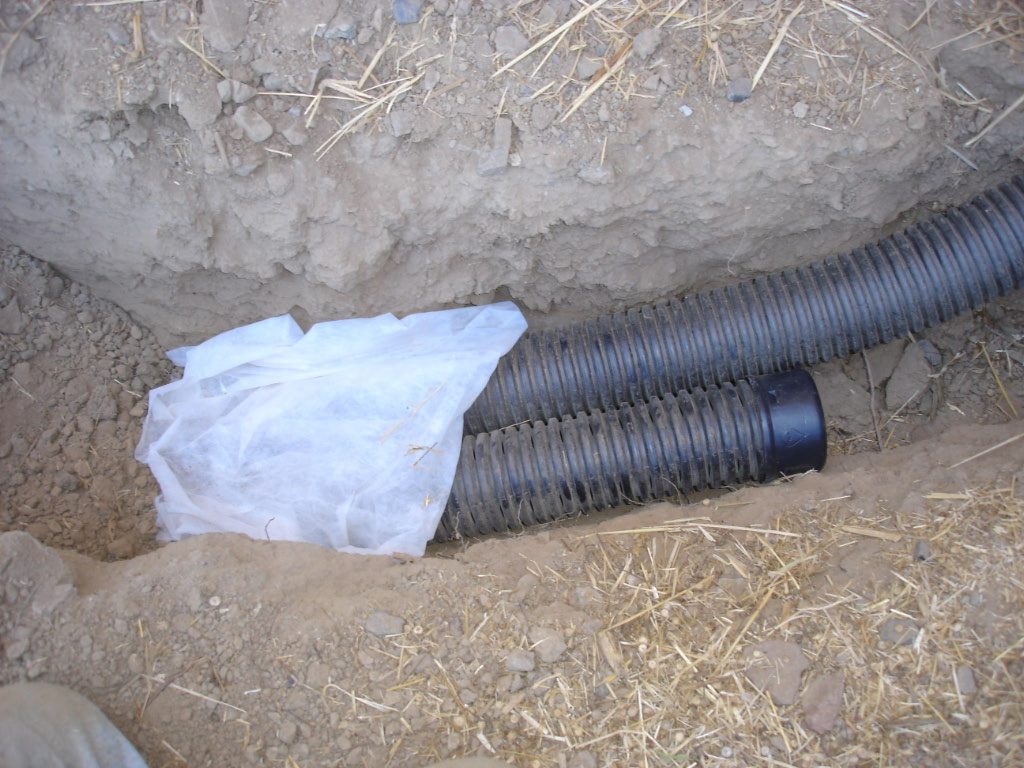
A French drain is simpler than it sounds. Crews dig a narrow trench, line it with filter fabric, lay a perforated pipe on a bed of washed gravel, and cover the pipe with more gravel before closing the fabric over the top. Water that moves through the soil reaches the gravel, drops into the pipe, and rolls downhill to a place where it can leave your property safely. The name is usually traced to Henry Flagg French, a Massachusetts farm writer whose 1859 book Farm Drainage described the method, and not to France. The design has barely changed since, because the physics is so basic: water follows the easiest path, and gravel and pipe are a much easier path than packed soil. The result is a quiet, hidden system that works every time it rains without pumps or power.
What to expect on a Taylor visit
- 01
Walk the property and read the water
We look at where water pools, where it enters the yard, and how it behaves a day after rain. We check lot slope, gutter outlets, neighboring grades, and fence lines. Photos of the yard during or right after a storm help a lot. This visit sets the drain's location and shows whether a French drain is the right tool at all.
- 02
Call 811 and mark the layout
Texas law requires a call to 811 at least two business days before digging, weekends and holidays excluded. Utilities mark their public lines for free. We also paint the planned trench path, and we flag private lines such as irrigation, which public locators usually do not mark, so the trench avoids them.
- 03
Set the slope and dig the trench
The trench is cut to a consistent grade, usually about one percent or steeper, and to a depth that suits the problem. We check the bottom with a laser or level before anything goes in. Sod and topsoil are set aside when possible so the lawn can be put back with less visible scarring.
- 04
Line, pipe, and gravel
Filter fabric lines the trench so clay and silt cannot clog the gravel. Washed stone goes down first, then perforated pipe with holes facing down in most designs, then more stone. The fabric folds over the top. Clean, rounded or angular washed stone is used rather than soil-laden fill that would plug the voids.
- 05
Build the outlet and connections
The solid pipe leading away from the perforated section runs to the chosen exit, such as a daylight point, a pop-up emitter, a catch basin, or a dry well where soil allows. Cleanouts or inspection points are added at turns where practical, so the line can be flushed later if it ever slows.
- 06
Test, backfill, and restore
We run water through the system to confirm flow and to watch the outlet. After a pass, the trench is topped with soil or a layer of decorative stone, and the area is raked and graded. We review the finished layout with you, including where the cleanouts are and what to watch after the first heavy rain.
Our approach in Taylor
- We walk the property in Taylor and trace where water comes from, where it collects and where it can legally go
- We explain what we find in plain language, with photos where they help
- Repairs and installs are planned around Williamson County permitting requirements
- You get written options before any repair work begins
- We call 811 to mark buried utilities before any digging
Soil and drainage conditions around Taylor
Taylor was built for the railroad. Like Hutto and Thrall, it grew after the railroad arrived around 1875, when land that had been mostly dormant turned into a shipping point for cotton and other crops. That history shows in the houses. Historic homes near the old downtown often have pier-and-beam foundations, deep porches, original sidewalks and little modern drainage. Mid-century neighborhoods have slab homes with older concrete and gutters that may be cracked or missing. Newer subdivisions on the edge of town have small lots and builder grading that is still settling. Each type needs a different approach. For an older house, we look first at how gutters, grade and the crawl space area handle water. For a newer slab home, we look at swales, downspouts and soil compaction. For a historic home, ask a neighbor with a similar house what drainage work has been done, because the earliest owners may have left no records.
French Drain Installation questions from Taylor homeowners
Will a French drain work in Taylor's black clay?
It can help, but the soil is slow to release water, so the drain mostly handles surface water and the shallow layer after rain. It will not dry out the deep clay. Success depends on a working outlet, and Taylor's flat ground makes that the first thing to confirm before any digging. Wet clay is sticky and heavy, so trenching is slower than it looks, especially right after rain.
How far from the house should the drain run?
Usually several feet out from the foundation, though the right spot depends on where water collects. A drain too close can disturb soil near the slab, and one too far may miss the problem. For suspected foundation movement, a structural engineer should evaluate the house before you decide on drainage. If you suspect the foundation has moved, get an engineer's opinion first, and keep the drain well clear of the footing.
Can I connect a French drain to the street?
Sometimes, but rules vary. Many cities allow a curb outlet or a pipe to a street inlet, while others do not. Taylor's rules may depend on your lot and the street. Check with the City of Taylor before you plan a connection, and confirm any HOA requirements as well. Bring your plat or survey to the city office so staff can point out easements and drainage rules.
Can a French drain protect my foundation?
It can help. By pulling extra water out of the soil near the slab, it reduces the wet and dry swings that stress foundations on expansive clay. It is not a foundation repair. If you see widening cracks, sticking doors, or gaps at trim, have a structural engineer or foundation repair company evaluate the house. Drainage and structural repair are separate jobs.
Do I need a permit or HOA approval?
It depends on your city and neighborhood. Some HOAs require approval for changes to grading or visible hardscape, and work in a drainage easement may need city approval. Rules differ from Pflugerville to Round Rock to Georgetown, so check with your city or HOA before work starts instead of assuming it is allowed. Ask for any approval in writing. Cities such as Pflugerville and Round Rock handle this differently.
How long does a French drain last?
A well-built system can last decades, because gravel and pipe do not wear out like mechanical parts. Its lifespan depends on how well the fabric keeps fines out, how roots are managed, and whether the outlet stays clear. Walk the outlet once or twice a year and clear leaves and debris so water can leave freely. Pipe never wears out like a pump.
More about french drain installation → · All services in Taylor →
Need french drain installation in Taylor?
Call or send a request. We will look at where the water goes, check the grade and give you a written estimate.