Taylor · Williamson County
Catch Basins & Channel Drains in Taylor, TX
Catch basins and channel drains collect surface water at low points, patio edges, driveway aprons and walkout areas. In Taylor's flat neighborhoods, they give water a defined place to go. A grate collects the runoff, and buried pipe carries it to an outlet. We size them for heavy rain, and they need occasional cleaning. Clear the grate of leaves and silt after heavy rain.
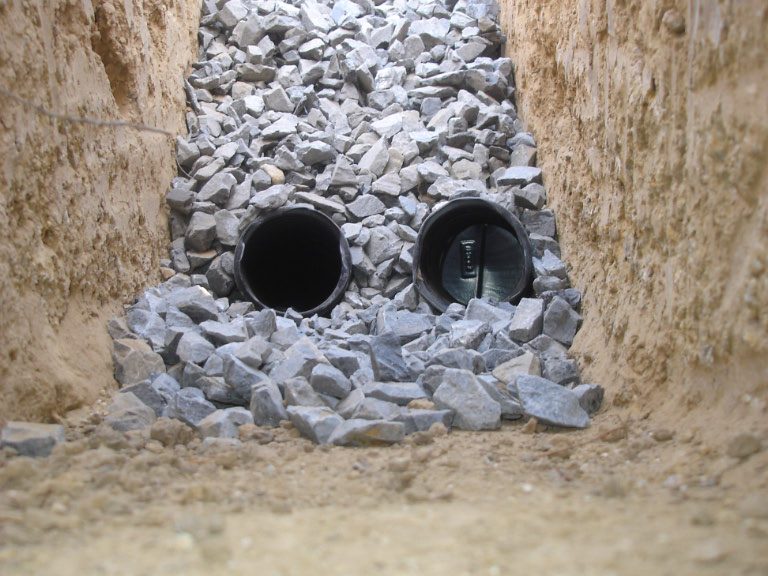
Catch Basins & Channel Drains for Taylor homes
When a lot is flat and the soil is clay, water has to be collected before it can be moved. That is the job of catch basins and channel drains. A catch basin sits at a low point, with a grate at ground level and a pipe leading out. A channel drain is a long slot set across a driveway, a garage entrance or a patio edge. In Taylor, where rain tends to spread over open ground and stall, these collectors turn a pond into a flow. Walk the lot during a storm if you can. Mark where water collects, where it enters, and which way it tries to leave. A drain works best at the place where water already slows down, not where we think it should be.
Common spots include the back corner of a lot where water from two yards meets, and the lowest point behind a garage. In newer Taylor subdivisions, builders often grade each lot toward the back and side property lines. When a fence, a shed or a neighbor's raised bed blocks that path, water stops and pools. A basin at that point, tied to solid pipe, gets water to the street or an approved outlet. Channel drains are useful at garage doors where slabs dip slightly toward the opening. Garage entrances need extra attention. A slab that dips even half an inch toward the door can send a sheet of water into the garage. A channel drain across the threshold with a pipe to the yard fixes it, and a threshold seal adds protection.
Because Taylor soil carries a lot of fine clay silt, basins need a sump and a way to be cleaned. We pick a unit with a removable bucket when possible. We also size the pipe for the drainage area, since a four-inch line may not be enough for a big paved area. Call 811 before digging, and confirm with the City of Taylor or your HOA that your outlet is allowed. Heavy-duty grates belong where vehicles drive. Sump depth and bucket size depend on what the water carries. In Taylor, that is often fine clay and lawn clippings. A deeper sump holds more silt between cleanings, and a bucket you can lift out keeps the job to a few minutes.
What to know in Taylor
Silt and clay clog easily
Runoff from bare Blackland soil is muddy. Silt settles in a basin and builds up fast in the first year after a lot is graded or sodded. Clean the sump often, and keep soil from washing into the grate with edging, mulch or sod placed around it. Ask for a drainage area estimate, so you know how much roof or pavement the basin serves.
Pick the right grate
A pedestrian grate on a driveway will crack under a loaded truck. In Taylor, where many homeowners park trailers and work vehicles, choose a grate with a load rating that matches the traffic. Also check that the opening is not so wide that heels or small paws catch. Keep lawn clippings off the grate when you mow. A quick sweep avoids clogs.
The outlet is part of the design
On a flat lot, getting the pipe from the basin to a legal outlet is the hard part. The City of Taylor can tell you if a street inlet or a ditch connection is allowed. Never aim the discharge at a neighbor's yard, which can run afoul of Texas Water Code Section 11.086. A pipe with cleanouts lets you flush sediment out of the line, not only the basin.
Signs you may need catch basins & channel drains
- Wet or stained concrete at the base of a wall
- Ponding at the bottom of a sloped yard after short storms
- A low spot in the lawn that holds water after every rain
- Water running across a patio or driveway toward a door or garage
How catch basins & channel drains works
Maintenance is where most failures start, and it is easy to prevent. Grates collect leaves, mulch, and toys, and a clogged grate stops catching water. A basin's sump fills with silt and needs to be scooped out once or twice a year, and more often under trees. Sediment is the biggest threat in clay country, because fine clay washes into the box and settles as hard cake. Check with your city or HOA before tying a drain to a street inlet or an easement, and call Texas811 at least two business days before any digging. A simple spring and fall cleaning routine keeps the system working at full capacity for years. Grates that are bolted or locked also keep children and pets from lifting them.
A catch basin is a box, usually plastic or concrete, set into the ground with an open grate on top. Water flows across the lawn, drops through the grate, and falls into the box. A pipe attached near the bottom carries it away. Many basins also have a sump, a few inches of empty space below the outlet pipe, where sand, leaves, and silt settle out instead of traveling down the line and clogging it. Catch basins are the right tool for a single low spot, such as the lowest corner of a back yard, where runoff gathers and has no natural way to leave. They are a point solution rather than a long-line one. Basins usually come in nine, twelve, and eighteen inch sizes, and the grate is chosen to match the amount of water headed its way.
What to expect on a Taylor visit
- 01
Find the low spots and flow paths
We watch how water moves across your lot during or after rain, marking where it collects, where it crosses hard surfaces, and where it should leave. We also check the existing slope of patios and drives. This tells us whether a basin, a channel drain, or both are the right tools for your yard.
- 02
Size the system to the water
We estimate how much roof, paving, and lawn drains toward each point, then choose a grate size and pipe diameter that can handle it. Four-inch pipe works for many small yards, while larger areas call for six-inch. Sizing too small is the most common reason a drain overflows in a hard rain.
- 03
Call 811 and plan the outlet
Texas law requires a call to 811 at least two business days before digging, not counting weekends and holidays. We then confirm the outlet: a lower part of your lot, a pop-up emitter, a dry well, or an approved street connection. City and HOA rules differ, so we check before any trenching begins.
- 04
Excavate and set the basin or channel
The hole or trench is dug to the depth needed, and the base is leveled on compacted gravel so the unit does not settle. The grate is set slightly below the surrounding grade so water flows into it. Channel drains are set to a gentle slope, and they are anchored with concrete when they sit in a slab.
- 05
Connect solid pipe and add cleanouts
Solid pipe leaves the basin or channel and runs downhill to the outlet, joined with proper fittings and sealed at the connection. Cleanouts are added at turns so the line can be flushed. We run water into the system before backfill to check for leaks, standing water in the pipe, and the speed of flow.
- 06
Backfill, finish, and show you the upkeep
The trench is backfilled in layers, the surface is graded to feed water into the grate, and sod or concrete is restored. We then show you how to remove the grate, check the sump, and clear debris, so you know exactly what a simple spring and fall cleaning looks like. Ask to see it done once.
Our approach in Taylor
- We walk the property in Taylor and trace where water comes from, where it collects and where it can legally go
- We explain what we find in plain language, with photos where they help
- Repairs and installs are planned around Williamson County permitting requirements
- You get written options before any repair work begins
- We call 811 to mark buried utilities before any digging
Soil and drainage conditions around Taylor
Taylor was built for the railroad. Like Hutto and Thrall, it grew after the railroad arrived around 1875, when land that had been mostly dormant turned into a shipping point for cotton and other crops. That history shows in the houses. Historic homes near the old downtown often have pier-and-beam foundations, deep porches, original sidewalks and little modern drainage. Mid-century neighborhoods have slab homes with older concrete and gutters that may be cracked or missing. Newer subdivisions on the edge of town have small lots and builder grading that is still settling. Each type needs a different approach. For an older house, we look first at how gutters, grade and the crawl space area handle water. For a newer slab home, we look at swales, downspouts and soil compaction. For a historic home, ask a neighbor with a similar house what drainage work has been done, because the earliest owners may have left no records.
Catch Basins & Channel Drains questions from Taylor homeowners
Is a catch basin better than a French drain for a flat Taylor yard?
They do different jobs. A basin collects water that runs across the surface into a low spot. A French drain collects water that sits in or just below the soil. Many flat lots need both, along with a good outlet. A look at how water behaves during rain shows which one fits. A basin works best when it is set slightly below the lawn, so water flows toward it.
How big should a channel drain be?
It should span the full width of the opening it protects, with a trough deep enough to carry the flow during heavy rain. Wider is better for big paved areas. The drain also needs an outlet pipe with enough capacity, so ask your installer how the flow was calculated. Mosquitoes breed in water that stands for several days, so make sure the outlet empties the basin.
Will a basin attract mosquitoes?
Standing water can. A basin that drains fully between storms is not a problem, but one with a low or blocked outlet may hold water for days. Make sure the pipe has fall, clean the sump, and watch it after rain. Mosquitoes need several days of still water to breed. A channel drain cannot fix a driveway that was poured sloping toward the garage if the water volume is high, so also look at the slab slope.
Can a drain be installed in existing concrete?
Yes, but it takes more work. The slab is saw cut, the concrete removed, the drain set at the correct slope, and new concrete poured around it. The patch is visible, and it needs time to cure. When possible, placing the drain at the edge of the slab in soil reduces cost and keeps the original surface intact. Ask how the patch will look.
Are these drains a fix for foundation problems?
They help protect a foundation by removing surface water near the slab, which evens out soil moisture on expansive clay. They do not repair a foundation that has already moved. If you see widening cracks, doors that stick, or uneven floors, a structural engineer or foundation repair company should evaluate the house. Drainage and structural repair are separate jobs. Keep the grate clear.
Do I need city or HOA approval for a new drain?
It depends on where you live and what you are connecting to. Work in a drainage easement, a connection to a street inlet, or a visible change to the yard may need approval. Rules vary by city and HOA, so check with your city or HOA first, and keep any approval in writing for your records. Photos of the planned route help the review.
More about catch basins & channel drains → · All services in Taylor →
Need catch basins & channel drains in Taylor?
Call or send a request. We will look at where the water goes, check the grade and give you a written estimate.