Wells Branch · Travis and Williamson Counties
Catch Basins & Channel Drains in Wells Branch, TX
Patios, courtyards and sloped driveways in Wells Branch can funnel water against the house. A channel drain across the bottom of a driveway or a catch basin in a low corner collects it and moves it through solid pipe. We size them for fast Austin cloudbursts and set grates where you can clean them. Clearing leaves and mulch from the grate once a season keeps it working.
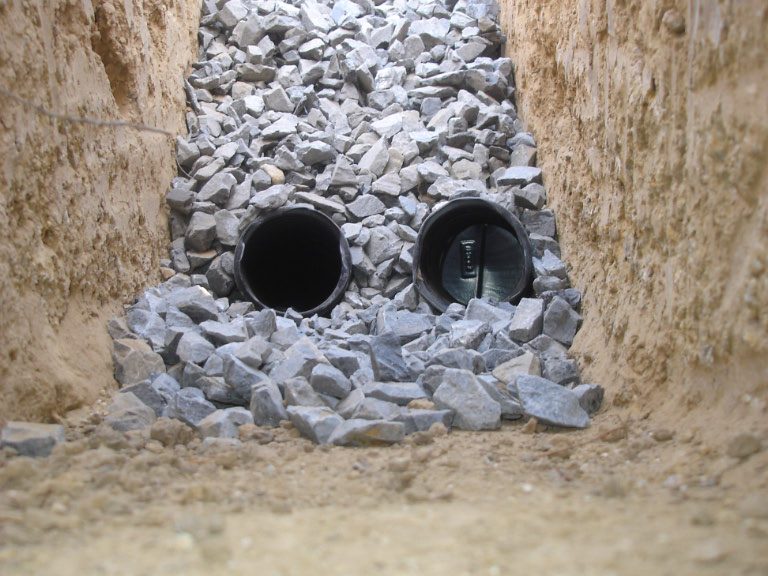
Catch Basins & Channel Drains for Wells Branch homes
In Wells Branch, catch basins and channel drains solve very specific problems. A small back patio that floods in the corner, a driveway that slopes into a garage door, a walkway that funnels water to a side gate. Each is a place where a surface drain captures water before it makes a mess. Because lots here are small, a single well-placed drain can serve the whole yard if it connects to a legal outlet. Surface drains work in tight spaces because they sit at the exact spot where water gathers. A 4-by-4-inch or 6-by-6-inch basin takes little room, and a channel drain two to four inches wide cuts across a driveway without changing its look. In a neighborhood where fences, planters and AC pads crowd the yard, that small footprint is a real advantage.
Channel drains are the better choice for a driveway apron. Many homes in the neighborhood have a concrete drive that tilts slightly toward the garage because the original grade settled. A channel drain across the garage threshold intercepts that sheet flow, sends it through a four-inch pipe and out to the street or a rear drain. Installation means cutting the concrete along a straight line, setting the drain flush and patching the edges, so the work is neat and short. Measure the water before choosing. A short rain test, with a hose running for a few minutes at the roof edge or downspout, shows how much water arrives and how fast. Pipe diameter, grate size and outlet type all depend on those numbers. A basin sized for a patio cannot handle a whole roof, and a channel sized for a driveway apron does not need to be as long as the garage door.
Catch basins fit best in low corners of the yard where a French drain would not collect enough water. Set in the lawn with a grate flush to the grass, a basin gathers surface flow and moves it away underground. On narrow lots near trails and greenbelts, the exit point is the main question. Ask the MUD or your association which drainage paths are open to you, call 811 before digging, and make sure the water ends somewhere that Texas Water Code section 11.086 allows. Surface drains need maintenance more than most drainage tools. Neighborhood trees drop leaves, bark and seeds, and sprinkler spray carries mulch onto walks. Choosing a grate with openings that suit your debris keeps it from clogging. Some owners add a basket filter inside the box so a quick lift and rinse clears the lot.
What to know in Wells Branch
Cutting existing concrete
A channel drain across a driveway or patio means saw-cutting a strip and breaking it out. Clean cuts reduce cracking, and fresh concrete should be finished flush with the grate. Ask how edges will be patched and whether the new strip will match the old color, since it often will not exactly.
Debris from nearby trees
Mature trees shed leaves, seed pods and small branches that land on grates and collect in basins. A basin with a deep sump and a removable grate lets you scoop debris out in a minute. Without that, the first fall storm can plug the drain and flood the area it was meant to protect.
Pipe size and outlet
A grate is only as good as the pipe behind it. Four-inch pipe handles light flows, but a large paved area can need six-inch pipe. The pipe has to run downhill to an outlet that is yours to use, whether that is a curb opening or a rear swale, with a minimum slope that holds.
Signs you may need catch basins & channel drains
- A low spot in the lawn that holds water after every rain
- Water running across a patio or driveway toward a door or garage
- Puddles at the end of a swale or against a fence line
- Mud, sediment, or sand washing across hard surfaces
How catch basins & channel drains works
A channel drain, sometimes called a trench drain, does the same job in a long, narrow strip. It is a shallow trough with a grate on top, set flush with the surface so water running across a patio, driveway apron, or garage threshold drops into it before it reaches the house. Channel drains come in widths from a few inches to ten or twelve inches, with plastic or metal grates built for foot traffic or, in heavier-duty versions, vehicle loads. Because they run in a line, they intercept sheet flow across a whole width, which a single basin cannot do. This makes them especially useful where a slab slopes toward a door. Slotted and bar grates differ in how much water they pass, so the grate type matters as much as the trough underneath it.
Both devices are only as good as the pipe and outlet behind them. A grate can pass hundreds of gallons a minute in a heavy rain, but if the pipe beneath is undersized, flat, or blocked, water backs up and floods the area the drain was meant to protect. That is why installers size the pipe to the area draining into it, set it on a steady slope, and make sure the discharge point can handle the flow. Typical outlets are the same as for other drains: a lower part of your lot, a pop-up emitter, a dry well, or a municipal connection where one is permitted. Always confirm the outlet is legal and safe before the first shovel hits the soil.
What to expect on a Wells Branch visit
- 01
Find the low spots and flow paths
We watch how water moves across your lot during or after rain, marking where it collects, where it crosses hard surfaces, and where it should leave. We also check the existing slope of patios and drives. This tells us whether a basin, a channel drain, or both are the right tools for your yard.
- 02
Size the system to the water
We estimate how much roof, paving, and lawn drains toward each point, then choose a grate size and pipe diameter that can handle it. Four-inch pipe works for many small yards, while larger areas call for six-inch. Sizing too small is the most common reason a drain overflows in a hard rain.
- 03
Call 811 and plan the outlet
Texas law requires a call to 811 at least two business days before digging, not counting weekends and holidays. We then confirm the outlet: a lower part of your lot, a pop-up emitter, a dry well, or an approved street connection. City and HOA rules differ, so we check before any trenching begins.
- 04
Excavate and set the basin or channel
The hole or trench is dug to the depth needed, and the base is leveled on compacted gravel so the unit does not settle. The grate is set slightly below the surrounding grade so water flows into it. Channel drains are set to a gentle slope, and they are anchored with concrete when they sit in a slab.
- 05
Connect solid pipe and add cleanouts
Solid pipe leaves the basin or channel and runs downhill to the outlet, joined with proper fittings and sealed at the connection. Cleanouts are added at turns so the line can be flushed. We run water into the system before backfill to check for leaks, standing water in the pipe, and the speed of flow.
- 06
Backfill, finish, and show you the upkeep
The trench is backfilled in layers, the surface is graded to feed water into the grate, and sod or concrete is restored. We then show you how to remove the grate, check the sump, and clear debris, so you know exactly what a simple spring and fall cleaning looks like. Ask to see it done once.
Our approach in Wells Branch
- We walk the property in Wells Branch and trace where water comes from, where it collects and where it can legally go
- We explain what we find in plain language, with photos where they help
- Repairs and installs are planned around Travis and Williamson Counties permitting requirements
- You get written options before any repair work begins
- We call 811 to mark buried utilities before any digging
Soil and drainage conditions around Wells Branch
Governance here is a little unusual. Wells Branch has long been served by a Municipal Utility District that funds parks, pools and trails, so the MUD may care about what happens in greenbelts and shared drainage areas. Depending on where your home sits, the county, the MUD and your HOA or condo association can each have a say over grading, fences and work near drainage channels. We could not verify specific permit rules for the area, so check with your MUD, the relevant county office and your HOA before regrading, building in a drainage easement or tying into a shared storm line. Texas Water Code Section 11.086 also prohibits diverting surface water in a way that damages a neighbor's property. Always call 811, since Texas law requires notice two business days before you dig, even in your own yard.
Catch Basins & Channel Drains questions from Wells Branch homeowners
Will a channel drain stop water from entering my garage?
It can, if the drain sits at the threshold, is sized for the flow and ties into a pipe that drains freely. It will not help if the driveway slopes so steeply that water jumps the grate. In that case, a grade change or a second drain farther up the drive may be needed. The grate should sit slightly below the surrounding concrete so water reaches it.
Do catch basins require maintenance?
Yes. Check after big storms and in fall when leaves drop. Clear the grate, scoop out the sump and make sure the pipe runs. A basin takes only a few minutes to clean when you keep up with it. Left alone, it clogs and loses its value. Cleaning takes minutes, and a basket filter can make it even quicker.
Where does the captured water go?
It goes through buried pipe to an approved exit, such as the street, a rear swale or a pop-up emitter. The exit must be on your property or a path you have the right to use. Never aim it at a neighbor. The MUD or your association can tell you what is allowed in Wells Branch. Ask for the discharge location on a sketch before work begins.
Do I need city or HOA approval for a new drain?
It depends on where you live and what you are connecting to. Work in a drainage easement, a connection to a street inlet, or a visible change to the yard may need approval. Rules vary by city and HOA, so check with your city or HOA first, and keep any approval in writing for your records. Photos of the planned route help the review.
What is the difference between a catch basin and a channel drain?
A catch basin is a box with a grate that collects water at a single point, like the lowest corner of a yard. A channel drain is a long, narrow trough that catches water along a line, such as across a patio or driveway. Basins suit low spots, and channel drains suit water crossing a hard surface in a wide sheet. Many yards use one of each.
Where does the water from a catch basin go?
It travels through buried solid pipe to an outlet. Common outlets are a lower part of your own lot, a pop-up emitter, a dry well, or a street connection where your city allows it. Texas Water Code Section 11.086 prohibits diverting surface water in a way that damages a neighbor's property, so the outlet must be chosen with care. A site visit confirms the exit before work starts.
More about catch basins & channel drains → · All services in Wells Branch →
Need catch basins & channel drains in Wells Branch?
Call or send a request. We will look at where the water goes, check the grade and give you a written estimate.